




SURVEY FINDINGS
1
VM program size and growth
SURVEY FINDINGS
Where VM programs live
According to the survey, 68% of the participating companies have a dedicated VM program, most of them managed by their respective sales organizations and targeting the same audience.
Average team size
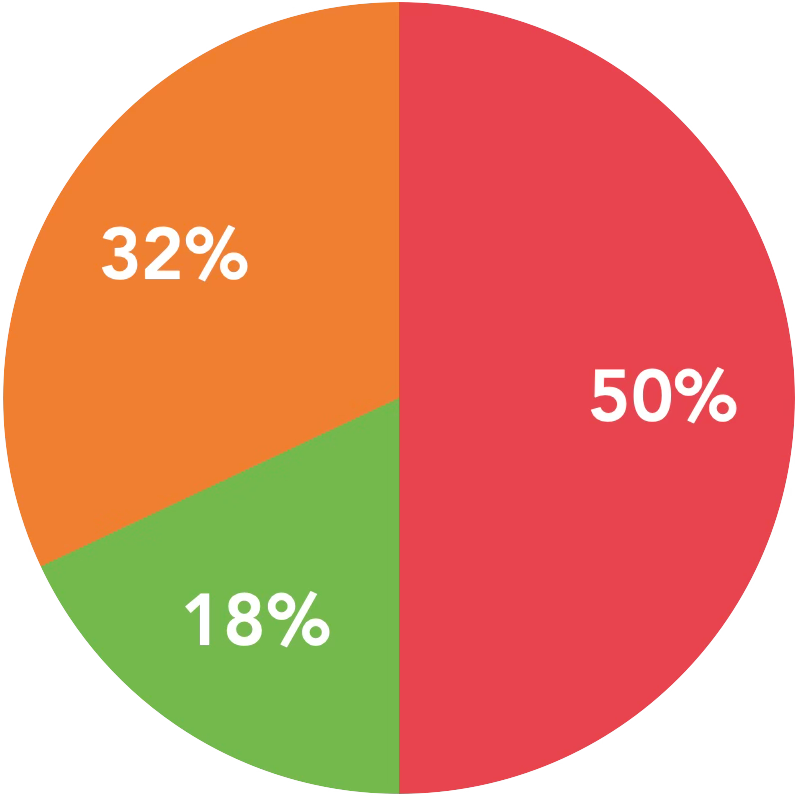
After the previous year’s growth spurt, programs saw a slight decline in average team size this year, with only 50% employing 11 or more full-time equivalents (FTEs), down from 66% in 2024 (see Figure 1).
Figure 1: VM team size
2024

2025

Not surprisingly, larger companies tend to have bigger VM teams: 71% of companies with more than $10 billion in revenue have teams of 11 FTEs or more, while only 20% of companies with less than $1 billion in revenue employ teams of 11 or more. There was still considerable variety in team size across segments, likely due to the diversity of respondents, which includes both newer and more established programs.
Expected team growth
Respondents anticipate strong program growth this year, with 23% expecting gains of 10% or more, up from 13% last year (see Figure 2). Only 9% expect negative or flat growth, a sharp improvement from the 47% reporting negative-to-flat team growth a year ago. Looking forward, 77% of VM programs expect headcount growth of 10% or less, while 23% expect more than 10% growth.
Figure 2: Expected VM team headcount growth

2023
2024
2025
See tabs on the right for more information.
2
SURVEY FINDINGS
PROGRAM FUNDING
Flat to slightly lower annual budgets
Value management program budgets have seen a slight decline this year (see Figure 3). According to the survey, the average annual VM budget in 2025 was approximately $2.8 million, down from $3.1 million the previous year. Program budgets vary widely, ranging from under $500,000 to over $5 million per year.
Figure 3: VM Program Budgets

2023
2024
2025
Growth prospects
Budgets are expected to stay relatively steady year over year: 41% of programs anticipate negative-to-flat budgets, similar to 40% in 2024, while 9% now expect increases of more than 10%, up from 7% last year (see Figure 4).
Figure 4: Expected VM program budget growth

2023
2024
2025
Expanding the reach of value management programs remains a critical challenge. To fully realize their potential, alignment across all business functions is essential—including executive sponsorship, line-of-business relationships, sales, marketing, and customer success teams, finance and operations, and IT organizations.
See tabs on the right for more information.

3
SURVEY FINDINGS
OFFSHORING
TRENDS
Flat to slightly lower annual budgets
VM programs were more reliant on outsourced teams in 2025, with 55% now using teams located outside their home country, up from just 13% last year (see Figure 5). Hybrid models are typical, with customer-facing teams based onshore and tool development teams offshore.
Figure 5: Change in use of offshoring resources

2024

2025
Not surprisingly, larger companies tend to have bigger VM teams: 71% of companies with more than $10 billion in revenue have teams of 11 FTEs or more, while only 20% of companies with less than $1 billion in revenue employ teams of 11 or more. Overall the average program employed slightly more than 11 FTEs across all respondents. However, there was condiderable variety in team size across segments, with some small companies fielding more than 11 VM team members. This is likely due to the diversity in respondents, which includes both relatively new programs and those with established programs.
Flat to slightly lower annual budgets
The annual cost of an onshore FTE averaged about $232K this year—consistent with 2024. For offshore teams, the average VM FTE cost was reported to be about $65K, also aligning with last year’s findings.
See tabs on the right for more information.
4
SURVEY FINDINGS
USE OF BUSINESS CASES IN SALES DEALS
Flat to slightly lower annual budgets
To gauge VM program maturity, we asked what share of sales deals include a business case. This year, 86% of programs used business cases in less than half of their deals, while only 14% did so in more than half (see Figure 6). This matches our experience, as most companies still do not routinely provide business cases for their customers.
Figure 6: Percentage of deals including a business case

2023
2024
2025
Not surprisingly, larger companies tend to have bigger VM teams: 71% of companies with more than $10 billion in revenue have teams of 11 FTEs or more, while only 20% of companies with less than $1 billion in revenue employ teams of 11 or more. Overall the average program employed slightly more than 11 FTEs across all respondents. However, there was condiderable variety in team size across segments, with some small companies fielding more than 11 VM team members. This is likely due to the diversity in respondents, which includes both relatively new programs and those with established programs.
Types of business cases produced
VM programs deploy a wide range of business cases throughout the customer journey, with most VE teams focusing on robust ROI business cases, outside-in benefit assessments, and customer success tools. The survey indicates significant opportunities to extend business cases across additional buyer touchpoints. By expanding existing models and value IP upstream to boost lead generation and top-of-funnel performance, and downstream to strengthen customer success, renewals, and upsell/cross-sell, organizations can capture substantial additional ROI.
Barriers to effective business case adoption
Creating business cases can be daunting, with 41% of survey participants stating that the process is too complex and time-consuming, taking an average of about 6 weeks to create. Some teams express concern that models may be too complicated for customers to easily comprehend. This highlights the need to design models and tools that are more user-friendly and tailored to the buyer's journey.
5
SURVEY FINDINGS
Use of business case tools
Adoption of business case tools
Flat to slightly lower annual budgets
Value management tools—such as ROI models and business case automation software—help VM teams improve business case quality, accuracy, and delivery speed. Yet, nearly half of respondents use fewer than 5 tools, even though the average tool deployment across all companies is 10.5 and 43% of the largest companies ($1 billion plus in revenue) manage more than 15 tools. This adoption gap highlights the substantial opportunity to scale VM programs and embed more business cases into sales engagements to improve win rates.
6
SURVEY FINDINGS
Support for partner and channel sales organizations
Flat to slightly lower annual budgets
This year, 55% of responding companies said their value management programs actively support partner and channel sales organizations (see Figure 7). Many VM teams prioritize retention, playing a key role in upsell, cross-sell, and new prospecting efforts, with 75% reporting they directly influence upsell and cross-sell activities.
Figure 7: Percent of VM Programs providing channel sales support

2023
2024
2025
Not surprisingly, larger companies tend to have bigger VM teams: 71% of companies with more than $10 billion in revenue have teams of 11 FTEs or more, while only 20% of companies with less than $1 billion in revenue employ teams of 11 or more. Overall the average program employed slightly more than 11 FTEs across all respondents. However, there was condiderable variety in team size across segments, with some small companies fielding more than 11 VM team members. This is likely due to the diversity in respondents, which includes both relatively new programs and those with established programs.
See tabs on the right for more information.
7
SURVEY FINDINGS
Internal marketing of VM programs
Flat to slightly lower annual budgets
VM programs use a mix of internal tactics—marketing campaigns, sales events, and road shows—to build awareness. Yet even though sales kickoffs are the most common venue, only 41% use them specifically to support VM initiatives, indicating these programs often remain an afterthought (see Figure 8).
Flat to slightly lower annual budgets
Figure 8: Internal Marketing channels for VM programs

Not surprisingly, larger companies tend to have bigger VM teams: 71% of companies with more than $10 billion in revenue have teams of 11 FTEs or more, while only 20% of companies with less than $1 billion in revenue employ teams of 11 or more. Overall the average program employed slightly more than 11 FTEs across all respondents. However, there was condiderable variety in team size across segments, with some small companies fielding more than 11 VM team members. This is likely due to the diversity in respondents, which includes both relatively new programs and those with established programs.
8
SURVEY FINDINGS
Rise of AI in value management programs
Boosting productivity with AI
VM teams are rapidly adopting AI to boost productivity and amplify program impact (see Figure 9), using it for research (86%), content creation and writing support (57%), and business case support (14%), while many other applications remain experimental.
Flat to slightly lower annual budgets
8
SURVEY FINDINGS
Rise of AI in value management programs
Boosting productivity with AI
Flat to slightly lower annual budgets
VM teams are rapidly adopting AI to boost productivity and amplify program impact, using it for research (86%), content creation and writing support (57%), and business case support (14%), while many other applications remain experimental.
Flat to slightly lower annual budgets
As noted in AI Driven Value Management (Wiley),
“When companies combine the power of AI with modern value management tools and technologies, current barriers to revenue and customer growth can be eliminated.”
Figure 9: Use of AI in VM programs

Not surprisingly, larger companies tend to have bigger VM teams: 71% of companies with more than $10 billion in revenue have teams of 11 FTEs or more, while only 20% of companies with less than $1 billion in revenue employ teams of 11 or more. Overall the average program employed slightly more than 11 FTEs across all respondents. However, there was condiderable variety in team size across segments, with some small companies fielding more than 11 VM team members. This is likely due to the diversity in respondents, which includes both relatively new programs and those with established programs.
VM business performance metrics
See tabs on the right for more information.
Figure X: Use of AI in VM programs

2024
2025
Not surprisingly, larger companies tend to have bigger VM teams: 71% of companies with more than $10 billion in revenue have teams of 11 FTEs or more, while only 20% of companies with less than $1 billion in revenue employ teams of 11 or more. Overall the average program employed slightly more than 11 FTEs across all respondents. However, there was condiderable variety in team size across segments, with some small companies fielding more than 11 VM team members. This is likely due to the diversity in respondents, which includes both relatively new programs and those with established programs.
8
SURVEY FINDINGS
Rise of AI in value management programs
Boosting productivity with AI
Flat to slightly lower annual budgets
VM teams are rapidly adopting AI to boost productivity and amplify program impact, using it for research (86%), content creation and writing support (57%), and business case support (14%), while many other applications remain experimental.
Flat to slightly lower annual budgets
As noted in AI Driven Value Management (Wiley),
“When companies combine the power of AI with modern value management tools and technologies, current barriers to revenue and customer growth can be eliminated.”
Figure 8: Use of AI in VM programs

Not surprisingly, larger companies tend to have bigger VM teams: 71% of companies with more than $10 billion in revenue have teams of 11 FTEs or more, while only 20% of companies with less than $1 billion in revenue employ teams of 11 or more. Overall the average program employed slightly more than 11 FTEs across all respondents. However, there was condiderable variety in team size across segments, with some small companies fielding more than 11 VM team members. This is likely due to the diversity in respondents, which includes both relatively new programs and those with established programs.
See tabs on the right for more information.
9
SURVEY FINDINGS
Business impact of VM programs
VM business performance metrics
Flat to slightly lower annual budgets
A key objective of the survey was to quantify the business impact of value management programs on the bottom line. Most VM programs in the survey operate with budgets above $1 million and generate an estimated 130x sales-to-investment return.
$130M sales impact from VM programs
Flat to slightly lower annual budgets
VM programs are paying off for a growing cohort of companies. In this year’s survey, respondents reported that VM programs influenced an average of $130 million in annual sales—about $11.4 million per VM FTE per year—up from $100 million in 2024. As VM practices mature, more programs report using them to shorten sales cycles, with 42% indicating they close deals 10–20% faster by applying VM tools and strategies
130x sales to investment
$130M per year in sales impact
$11.4 M per FTE-year
10-20% faster deal close
See tabs on the right for more information.
Figure X: Use of AI in VM programs
2024
2025
Not surprisingly, larger companies tend to have bigger VM teams: 71% of companies with more than $10 billion in revenue have teams of 11 FTEs or more, while only 20% of companies with less than $1 billion in revenue employ teams of 11 or more. Overall the average program employed slightly more than 11 FTEs across all respondents. However, there was condiderable variety in team size across segments, with some small companies fielding more than 11 VM team members. This is likely due to the diversity in respondents, which includes both relatively new programs and those with established programs.